It seems like everything I do in life is last minute, so why should the process of introspection leading up to Rosh Hashanah be any different? My final thoughts on 5771 and best wishes for a sweet new year for all.
Blessings of 5771:
I am grateful for the many joys and simchas that filled my life in 5771. Each of these moments have helped transform me into a better person, each in their own unique way. It was truly a year of beautiful, bountiful blessings. My Top 10 of 5771, in chronological, not preferential order:
10. My First Marathon
Shortly after ringing in the new year of 5771, I strapped on my running shoes and completed my first marathon in the Hamptons. The training experience made me a lover of running. I learned that running is perhaps the most challenging, peaceful, and powerful activity I have ever engaged in. I pushed myself to my body's limits and experienced a high I have never felt before. The entire experience not only opened my eyes to a new mode of spirituality, but also taught me the power of the mind and the body. Thinking about Twin Cities Marathon 5773...Who's in??
9. Marrying the Love of My Life
The 14 of Cheshvan was probably the most memorable and beautiful day of my life. I felt blessed to share this day with so many wonderful friends and family. I love you John, you push me to grow every day.
8. The Packers Win the Superbowl
I am not ashamed to admit that the Packers bring me joy and happiness. So many smiles from the Packers in 5771. Hoping for many more smiles in 5772!
7. Receiving My Masters of Arts in Religious Education
I was very fortunate to be part of the Mandel Fellowship this year. Not only did the Mandel Fellowship bring me to Malibu, Boston, and Israel, but also provided the funding for me to attend the school of Education at HUC-JIR. The entire year was incredible. The program helped me develop a personal and professional vision, and also taught me how to apply everything I learn in rabbinical school in the real world. I'm very grateful for this opportunity and really proud to officially be able to call myself a Jewish Educator.
6. Israel
This was my first time back in Israel since my year in Israel in 5767-5768. It was an amazing trip, personally and professionally. I felt like I really needed this trip to rejuvenate my connection to Israel and reconnect with a place that holds so much meaning to me as a Jew. The program pushed me to think about peoplehood and the role of Israel in my life as an American Jew in so many important ways. Personally, I got to experience everything again for the first time with John and also got to reunite with good friends.
5. Rome
An amazing vacation to an amazing city. Great food and great company. Italy won me over, once again. Ciao bella!
4. Tony Plush and The Milwaukee Brewers
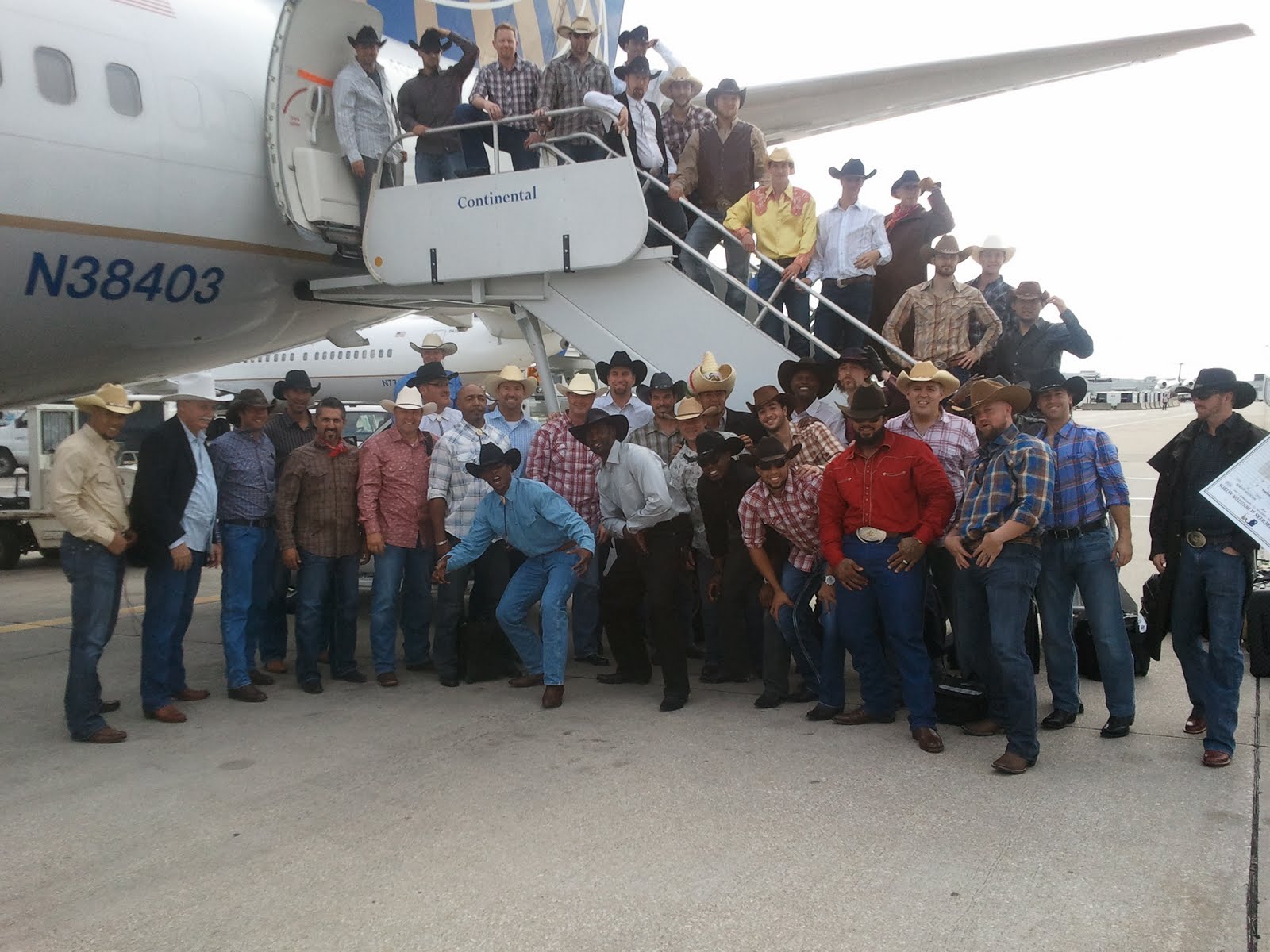
What a year for Wisconsin sports! The last time the Brewers clinched the division was 5742. I was born in 5743, so this is a first in my lifetime, and what a first it has been!! This year, I watched more baseball than I have probably ever in my life and I can say that I loved every single minute. The Brewers are putting the fun back in baseball on and off the field. T. Plush, Braunny, Prince, the Ax Man. How can you not love this team?! So excited for 5772! GO CREW!
(This is a picture of the Brewers participating in a theme day after playing the Houston Astros. Yee-haw!)
3. Sharing In My Friends and Families Many Simchas.
Many of my loved ones experienced simchas this year. We were lucky enough to participate in some of them in person, and experienced the joy of others in spirit. Congrats to:
Marc & Julia, Evan & Jenny, Allie & Andrew, Nate & Cemre, Simcha & Julie, Jon & Erin, Matt & Breanne, Adina & Steve, Nutan & Manoj
Your joy is my joy. I love you.
2. My jobs.
I know that I am in the minority of people who can say they love their job. And Forbes confirmed my professional happiness! This year, I started teaching Introduction to Judaism at the URJ in addition to working as the 4th Grade Level Coordinator at Shaaray Tefila. Thanks for the opportunity to engage in meaningful and fulfilling work everyday.
1. The First 20 Weeks of Pregnancy and Finding Out About Baby Girl Crimmings
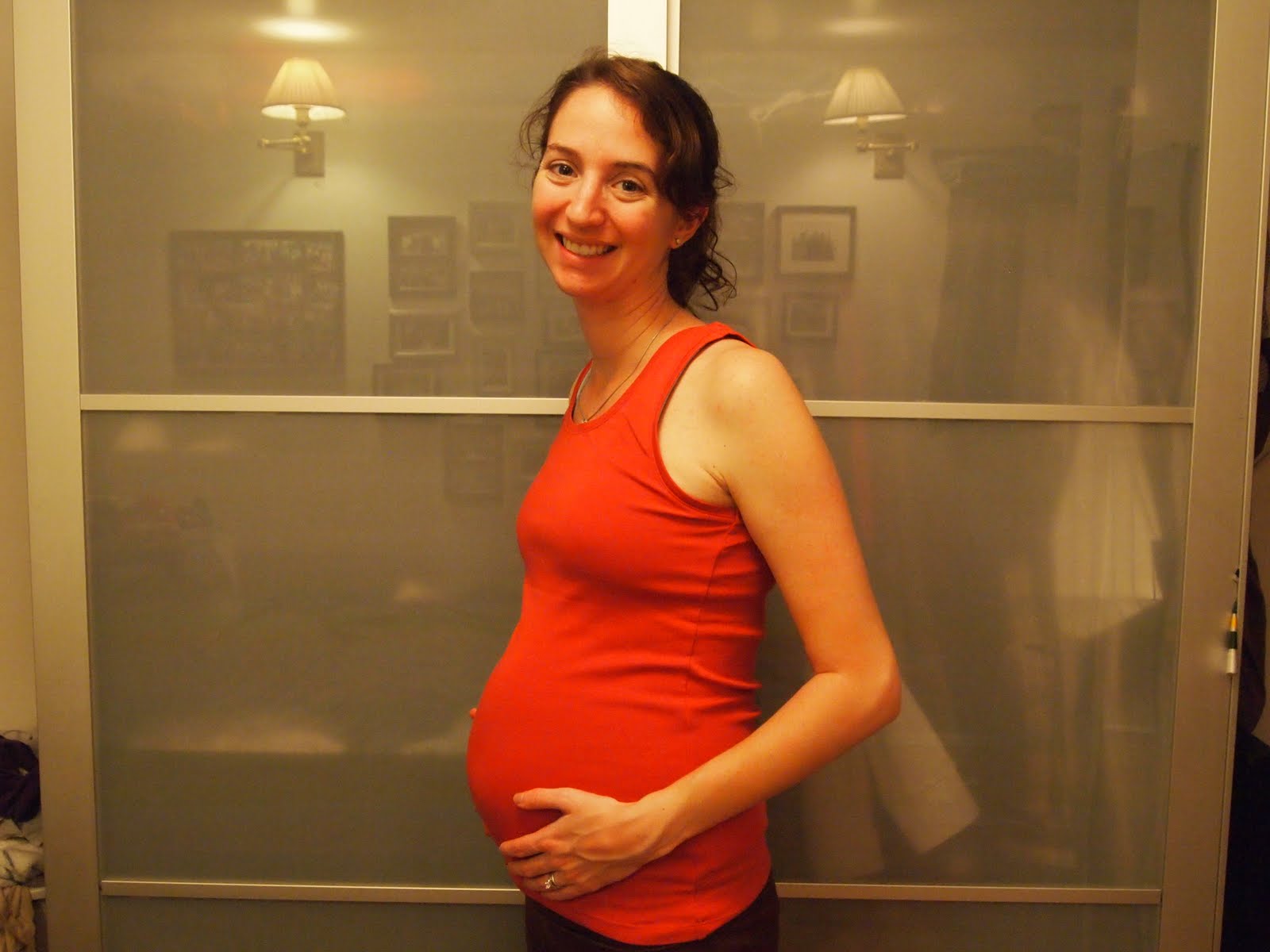
I love being pregnant. Every day is something new, in an amazing way. I love my growing belly and I love my growing appetite. Thinking about and feeling what is happening inside me is the craziest and most incredible experience. Yesterday we found out we are having a girl and we couldn't be more excited! It is hard to even put words to this blessing, other than that I pray for continued blessing in 5772.
Personal Hardships of 5771:
This year, the world lost two wonderful men, both of whom touched the lives of so many people and will truly be missed.
Scott Croegaert, my uncle.
Nathan Fishbach, my good friend's dad.
Zichrona livracha, may your memories always be for a blessing.
All my thoughts continue to be with all my other loved ones in need of healing.
Final Thoughts
What a year, wow. As I say goodbye to 5771, I can't help but imagine what the world will bring my way in 5772. Wishing all of you a happy, healthy, and sweet new year!
Shanah Tovah U'mtukah world!
Wednesday, September 28, 2011
Tuesday, June 21, 2011
Into the Settlements
This is one of my favorite t-shirts of all time. I bought it from woot.com and like to sport it in public places. Without needing to say more, I think you can imagine my feelings about spending a day touring a settlement in the West Bank. Though I have driven through the West Bank on numerous occasions (it is the quickest way to get to the Dead Sea and the south), I have never been to a settlement because it makes me feel ideologically uncomfortable on so many levels. But, if I have any hope of connecting to settlers as part of the Jewish people, part of my understanding of people, I need to try and look beyond their ideology and focus on them as people. Also, I had no choice. And so, I went, hoping to meet people, and ended up adding many new layers of complexity to my ideology.
Gush Etzion is one of the oldest and currently one of the most well-established settlements in the West Bank. It is located halfway between Jerusalem and Hebron and served as a significant military battlefield at different periods in the creation of the state of Israel. On the one hand, there is no difference between the story of Gush Etzion and almost every other Israeli city other than that Gush Etzion is over the Green Line, while others sit comfortably inside Israel’s recognized borders. Unlike many of the newer settlements, Gush Etzion holds deep significance in the modern Zionist-Israeli narrative. Today, close to 80,000 Jews live in the different villages that make up Gush Etzion. These residents have relatively peaceful and civil relations with the relatively few Palestinian villages in the vicinity. There is even a new supermarket where Jews and Palestinians work side by side and serve both populations in peace. This is a stark contrast to a settlement like Hebron, where 800 Jews live and flourish while 40,000 Palestinian residents suffer and struggle.
On the other hand, Gush Etzion is still a settlement. The population is relatively new, young, and ideologically driven. They could live in Israel, but are choosing to have nicer, newer homes, surrounded by people who are just like them. The person we met with, a reasonable and nice man, described the community as a homogenous suburb. The yeshiva we visited moved from Jerusalem to Gush Etzion a few years ago, both because the real estate was cheaper and also because they hold an ideological commitment to settle the land. According to our guide, popular consensus, even amongst more liberal leaning Jews in Israel, would include Gush Etzion as part of greater Israel, should a peace process lead to a two state solution with land swaps. So, even if a disengagement process ever happens, Gush Etzion will more than likely remain, or become, part of greater Israel.
The experience was emotionally and intellectually challenging. I learned that not all settlements are the same. Not all settlers are the same. This seems obvious, but its easy to get caught up in ideology and ignore the fact that they are real live people who have complex stories and experiences. Some of them are actually quite nice and are actually not crazy fanatics. I learned that the situation is even more complex than I already knew it was. More than anything else I learned how little I know about the situation. If I want to have a voice, I need to learn more and I need to make a point to open myself to more nice people who are willing to consider me part of their people, in the same way, I must ultimately be able to consider them part of mine.
Jewish Peoplehood?
I have more blessings in my life than I could possibly recount in one sitting. My personal and professional lives are filled with beautiful people and opportunities that consistently push me to learn and grow. In my professional life, I am particularly blessed to be part of the Mandel Fellowship, which is dedicated to developing leaders across the Jewish world. My particular fellowship is designed for rabbinical students seeking to develop a sense of vision as future rabbinic leaders through the lens of Jewish education. The fellowship explores four themes: Education as Growth, Vision, Community and Peoplehood. In order to participate in the fellowship I, along with six of my classmates, took a year off of rabbinical school to receive a Masters in Religious Education. In addition to taking courses in education at HUC, we met together for three seminars in Malibu, Boston, and now Israel. At these seminars we explore the different themes of the fellowship and how they relate to our own experiences, ideas and goals for the future. The Israel seminar serves as a culmination of our work, with a natural focus on the theme of Jewish peoplehood.
Jewish peoplehood is a spanking new concept. Though Jews have been called 'the people of Israel' since the biblical period, the concept of Jewish peoplehood originated as recently as the middle of the 20th century. In many ways, the notion of peoplehood originated out of a feeling that no other concept could accurately describe what it really is that binds Jews to one another. Despite popular opinion in America, Judaism is not a religion in the same way that Christianity is a religion. What I mean by this is that being Christian is fundamentally about belief in a particular faith. It is near impossible to call yourself Christian without some minimal commitment to faith. For many Jews, however, being Jewish has absolutely nothing to do with faith, belief, religious tradition, or God. When we start to define Judaism as only a religion (of course it is a religion!), we fail to acknowledge the multitude of legitimate expressions of Judaism. Before the notion of peoplehood came along, Judaism was described as a race, an ethnicity, a culture, a civilization and a nationality. Some of these notions were more helpful than others, and often illustrative of many individual Jewish experiences. That being said, each of these concepts fails to capture the totality of what it means to be Jewish in the world today.
Jewish peoplehood offers an alternative notion that suggests that Jews across the world (and perhaps across time) are in some way connected. The question becomes: How are Jews connected and what purpose do these connections serve? One of the goals of this seminar is to work toward developing a personal stance to these questions. The challenge and task is great and like everything Jewish, is immensely complex and filled with tension. If you are left wondering what in the world I am talking about, all I can say is that you are not alone, and with the presentation of my personal stance on peoplehood just days away, I hope to find a bit of clarity through my musings.
Jewish peoplehood is a spanking new concept. Though Jews have been called 'the people of Israel' since the biblical period, the concept of Jewish peoplehood originated as recently as the middle of the 20th century. In many ways, the notion of peoplehood originated out of a feeling that no other concept could accurately describe what it really is that binds Jews to one another. Despite popular opinion in America, Judaism is not a religion in the same way that Christianity is a religion. What I mean by this is that being Christian is fundamentally about belief in a particular faith. It is near impossible to call yourself Christian without some minimal commitment to faith. For many Jews, however, being Jewish has absolutely nothing to do with faith, belief, religious tradition, or God. When we start to define Judaism as only a religion (of course it is a religion!), we fail to acknowledge the multitude of legitimate expressions of Judaism. Before the notion of peoplehood came along, Judaism was described as a race, an ethnicity, a culture, a civilization and a nationality. Some of these notions were more helpful than others, and often illustrative of many individual Jewish experiences. That being said, each of these concepts fails to capture the totality of what it means to be Jewish in the world today.
Jewish peoplehood offers an alternative notion that suggests that Jews across the world (and perhaps across time) are in some way connected. The question becomes: How are Jews connected and what purpose do these connections serve? One of the goals of this seminar is to work toward developing a personal stance to these questions. The challenge and task is great and like everything Jewish, is immensely complex and filled with tension. If you are left wondering what in the world I am talking about, all I can say is that you are not alone, and with the presentation of my personal stance on peoplehood just days away, I hope to find a bit of clarity through my musings.
Subscribe to:
Posts (Atom)


